Historic
Old town and seafront
The historic quarter on the shore, with old stone houses and mosques.

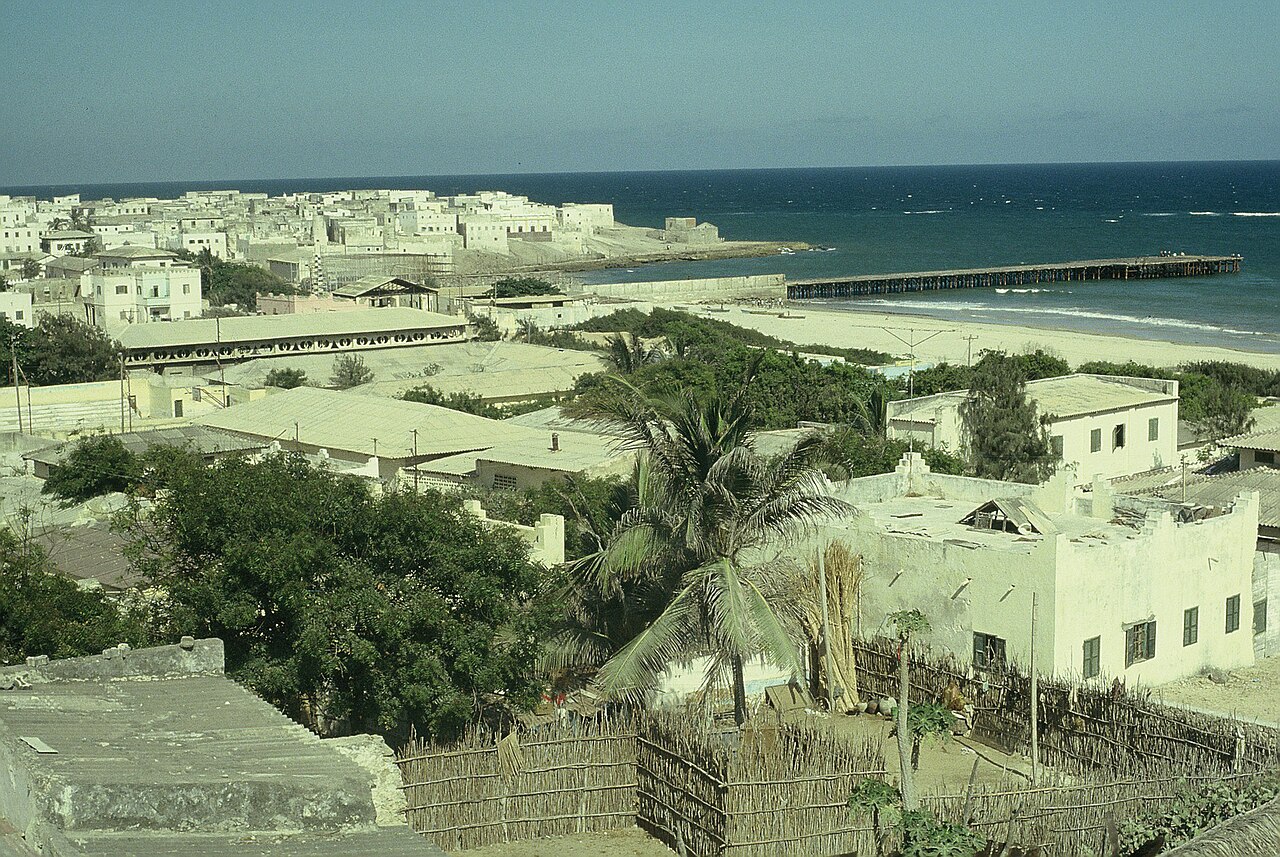
An ancient port on the Benadir coast southwest of Mogadishu: white beaches, an old town hugging the sea and a trading history that goes back more than a thousand years.
Merca (Marka in Somali) is a port town on the Indian Ocean, about 70 km southwest of Mogadishu, and the administrative centre of the Lower Shabelle region. Its old town looks straight out to sea, framed by long beaches of pale sand.
The town has long been tied to the farmlands of the Shabelle valley behind it, serving for generations as an outlet for grain and, in the 20th century, for bananas. Today it is the market and administrative hub of the surrounding region.
The historic quarter on the shore, with old stone houses and mosques.
Long beaches of pale sand on either side of the town.
A small historic port used by fishing and trading boats.
Merca existed by the 10th century and belonged to the chain of Benadir ports, with Mogadishu and Barawa, that traded across the Indian Ocean. Arab geographers of the 13th century counted it among the commercial and Islamic centres of the coast, and by the 17th century the Biimaal clan controlled the town and its trade routes.
The French explorer Charles Guillain called here in the 1840s, and his published account includes a view of the town. Under Italian rule Merca became a banana port, with exports to Italy beginning in 1927, while the surrounding district was the scene of the Biimaal resistance to colonial rule (1896–1926).
Like the other Benadir ports, Merca has a culture shaped by both the sea and the farms inland. Old mosques, the market and the seafront are where community life gathers, and the beaches fill up on holidays.
The local economy rests on Lower Shabelle farming, fishing and trade. Coral reefs offshore mean cargo has to be ferried by lighter between the port and ocean-going ships, and for much of the 20th century bananas were the main export.