Religious
Mosque of the Two Qiblas (Masjid al-Qiblatayn)
An ancient mosque with two mihrabs.

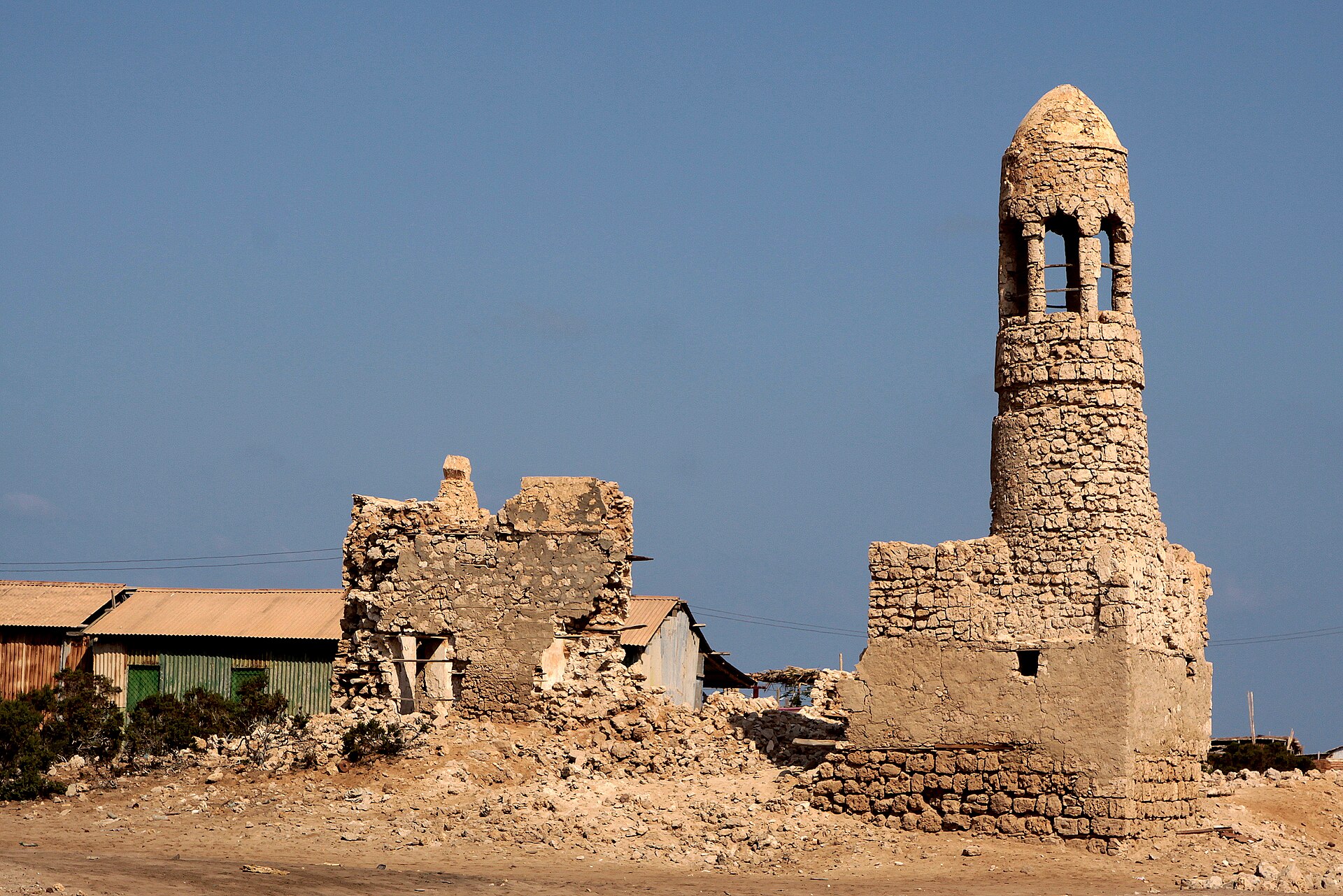
One of the oldest ports in the Horn of Africa: the Mosque of the Two Qiblas, ruins from the Adal Sultanate and islands strung along the Gulf of Aden coast.
Zeila (Saylac) is a historic coastal town in the west of the Awdal region, close to the border with Djibouti. It sits on a sandy spit surrounded by sea, with coral reefs, mangroves and small offshore islands.
Though now a small, quiet town, Zeila was for centuries one of the most important ports linking the Horn of Africa with Arabia and the Indian Ocean. Its stone ruins and ancient mosques still tell that story.
Somaliland declared independence in 1991; the Federal Government of Somalia considers it part of Somalia, and it is not recognised as a state by the United Nations or most countries.
An ancient mosque with two mihrabs.
Stone walls and ruined buildings from the Adal era and later.
Small offshore islands named after Sultan Sa'ad ad-Din II.
A quiet shoreline of coral reefs and mangroves.
Many scholars link Zeila with Avalites, a port named in the 1st-century Periplus, although the identification is debated. In the Islamic era it became a centre of trade and learning and a key port of the Ifat and Adal sultanates. The traveller Ibn Battuta visited in 1331.
Sultan Sa'ad ad-Din II was killed at Zeila in 1410; the nearby islands bear his name. The town later came under Ottoman protection, then Egyptian rule in the 1870s and finally British control. When the Djibouti–Addis Ababa railway opened in the early 20th century, trade shifted to Djibouti and Zeila declined.
The Mosque of the Two Qiblas (Masjid al-Qiblatayn) has two prayer niches, one facing Mecca and one facing Jerusalem. Tradition counts it among the earliest mosques in Africa, though its exact age has not been established archaeologically. The ruins of the old town and the tombs of scholars make Zeila a place of memory for the Islamic history of the Horn.
Today the economy depends on fishing, small-scale trade and remittances. Historically Zeila exported coffee, hides, ivory, livestock and ghee.